Current Inspection · Dating Systems
A New Excuse to Be Dirty—and Not the Good Dirty
Pheromone maxxing is the latest male-optimization theory to suggest that soap is suppressing your sexual chemistry. Skip showers. Avoid deodorant. Rewear the shirt. Let your primal signal emerge. The bacteria would like credit.
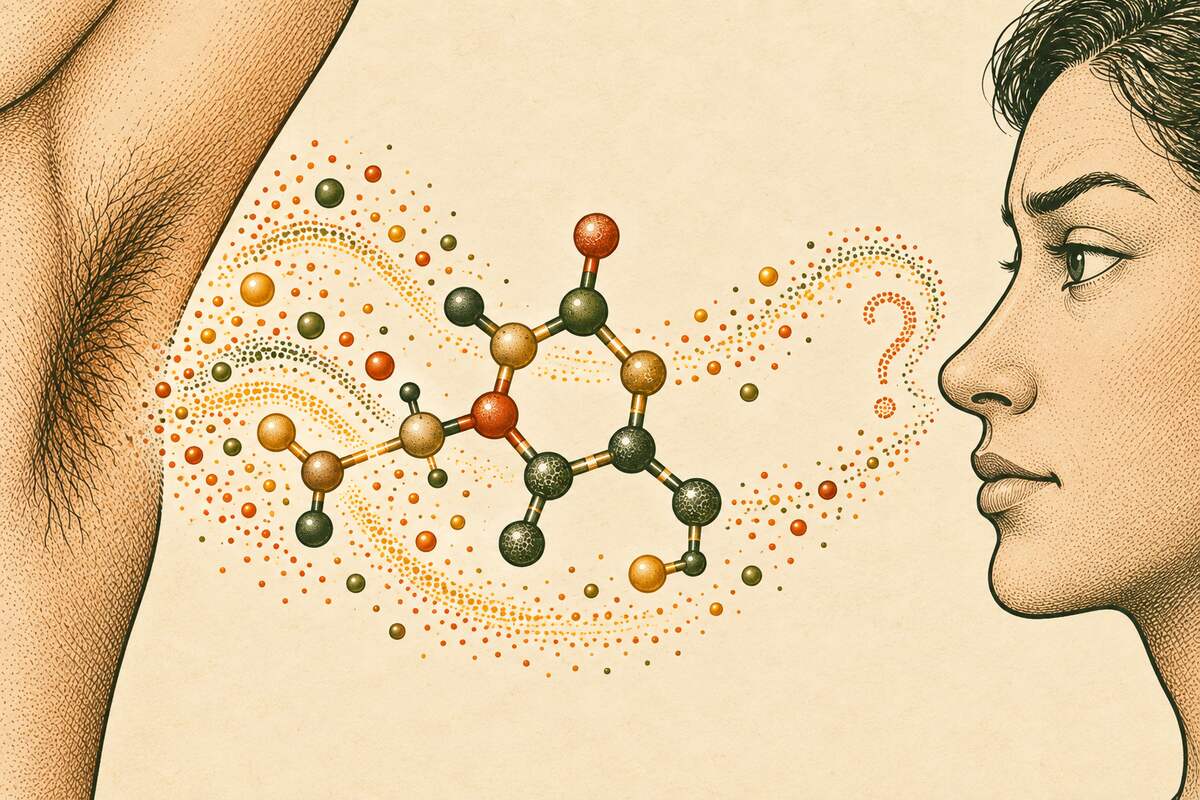
What is pheromone maxxing?
The reported trend is an offshoot of “looksmaxxing,” the online practice of treating attractiveness as a system that can be optimized through increasingly specific interventions. Pheromone maxxing takes the low-cost route: some men are reportedly skipping soap, deodorant, hair washing, and clean clothes before dates because they believe ordinary hygiene removes chemical signals that would otherwise attract women.
The premise contains a sliver of truth wrapped in a gym towel. Human beings perceive one another through smell. People can like or dislike another person’s natural scent. Familiar bodies, clothing, homes, partners, and children have recognizable odors. None of that establishes that deliberately accumulated BO contains a reliable sexual instruction.
The good dirty versus this dirty
There is good dirty: consensual sweat, sex, work, soil, paint, exertion, camping, dancing, and evidence that something worth doing occurred. Good dirty has context, participants, and an understood cleanup phase.
Pheromone maxxing is different. It converts lack of maintenance into a theory of attraction and quietly assigns everyone nearby a role in the experiment. A date did not consent to sit inside your attempt at chemical signaling. The server, rideshare driver, coworker, and neighboring table certainly did not.
That is why “natural” is doing suspicious work in the sales pitch. Plaque is natural. Mildew is natural. A sock becoming able to stand independently is a natural process. Nature does not mean desirable, strategic, or considerate.
The claim
Soap and deodorant remove or mask human pheromones, reducing sexual attraction.
The evidence
No human sex pheromone has been robustly identified, and the famous steroid candidates have not produced dependable effects.
The intervention
Skip washing, deodorant, and sometimes clean clothing to preserve “musk.”
The predictable output
Sweat components, skin oils, bacterial metabolism, odor-loaded textiles, and a person explaining pheromones during appetizers.
Pheromones are real. That does not finish the sentence.
In many species, pheromones are chemical signals that reliably affect other members of the same species. Moths are the glamorous example: a specific chemical signal can produce a specific behavioral response across remarkable distance.
Humans may use forms of chemical communication. That remains a legitimate scientific question. But Oxford zoologist Tristram Wyatt’s review found no robust evidence that the four steroid molecules repeatedly described as human pheromones had earned the name. His conclusion was not “humans definitely have none.” It was that researchers had spent decades testing convenient candidates without first establishing a reproducible human signal.
A controlled 2017 study likewise found that two purported human sex pheromones did not alter participants’ judgments of faces for gender, attractiveness, or likely unfaithfulness. The molecules did not behave like the popular story requires.
This distinction matters: not disproven is not the same as available through reduced shower frequency.
What your armpit is actually manufacturing
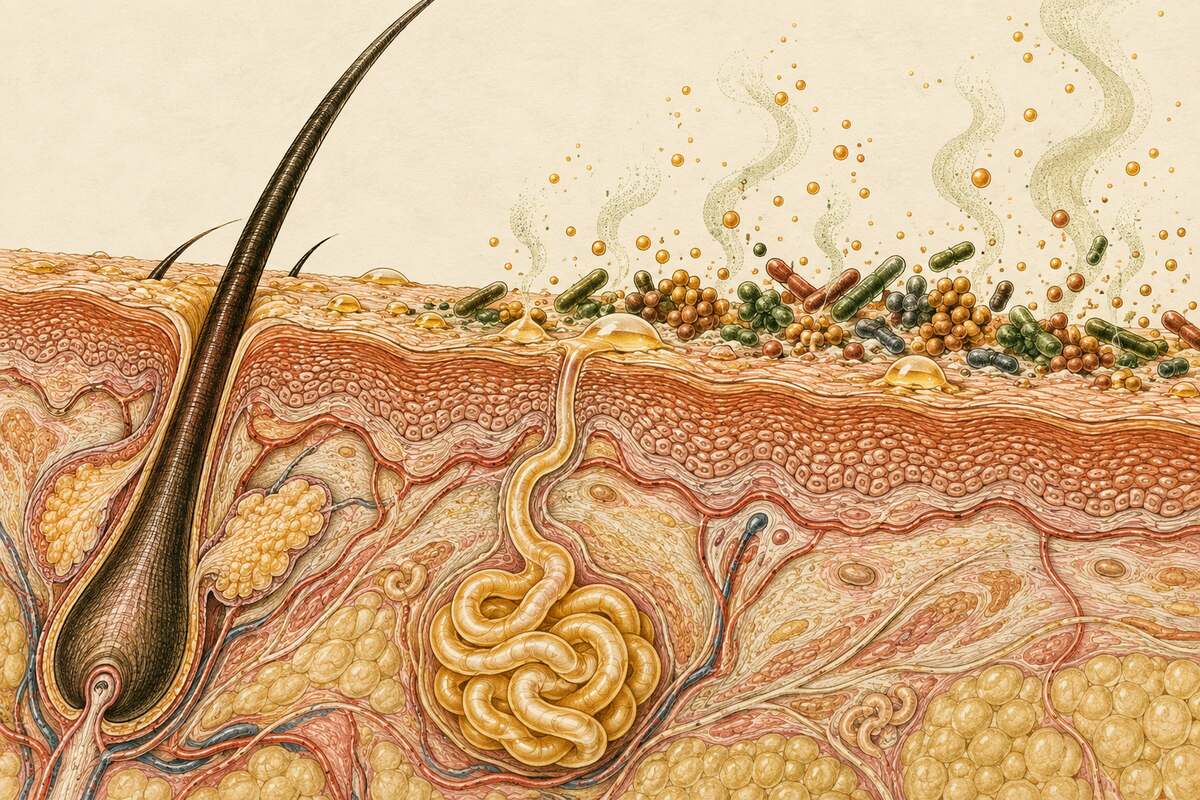
Freshly secreted sweat is largely odorless. Odor develops when members of the skin microbiome metabolize components of sweat and other secretions into volatile compounds. The armpit is warm, moist, folded, hairy terrain—excellent microbial infrastructure.
Clothing participates. Fibers collect sweat, oils, microorganisms, and odor compounds, then warm up again during repeat wear. Polyester can be particularly good at retaining the material associated with body odor. Rewearing a dirty shirt does not preserve a pure ancestral signal. It reactivates a textile archive.
The odor may be recognizably yours. Recognition is not seduction.
The optimization problem
Pheromone maxxing belongs to a family of internet ideas that convert ordinary uncertainty into a technical problem. Dating is difficult because other people possess agency, preferences, histories, moods, and the right not to want you. An optimization system offers relief: rejection is not relational; it is a failed protocol.
That promise is especially attractive when the protocol is rebellious. Showering becomes domestication. Deodorant becomes chemical suppression. Dirty clothes become biological authenticity. Neglect is upgraded into masculine discipline.
But consider the confidence trick: if somebody likes the way you smell, pheromone maxxing receives credit. If they dislike it, they are disconnected from nature. The theory cannot lose. Only the date can.
How to preserve natural scent without becoming a project
- Wash normally. Remove accumulated sweat, oil, grime, and yesterday’s bacterial output.
- Use unscented products if fragrance is the concern. “No perfume” and “no hygiene” are different operating systems.
- Wear clean clothes. Natural skin scent does not require a supporting performance from the laundry hamper.
- Use deodorant selectively if you want it. Deodorant addresses odor; antiperspirant reduces sweat. Neither is a moral requirement, but other people can still react to the result.
- Ask the actual person. A partner’s preference is more relevant than a viral theory about women as a chemical category.
The Meister’s verdict
Pheromone maxxing is a new excuse to be dirty—and not the good dirty. It borrows legitimate uncertainty in human chemical communication and spends it on yesterday’s shirt.
Your natural scent is real. Attraction through smell is real. The claim that avoiding hygiene releases an unblocked sexual signal is not established. What has been established is that bacteria can turn secretions into odor and that another person can move their chair.
INSPECTION STATUS: NATURAL MUSK · ARTIFICIAL CERTAINTY
Sources & scope
- The Indian Express, “‘Pheromone maxxing’: Why some people are ditching showers and deodorants.” September 2026 reporting on the trend and its self-optimization framing.
- Folha de S.Paulo, reporting on pheromone maxxing in the manosphere. September 2026.
- Wyatt, “The search for human pheromones: the lost decades and the necessity of returning to first principles,” Proceedings of the Royal Society B (2015).
- Hare et al., “Putative sex-specific human pheromones do not affect gender perception, attractiveness ratings or unfaithfulness judgements,” Royal Society Open Science (2017).
- American Society for Microbiology, “Microbial Origins of Body Odor.”
- Chang et al., “Sweat and odor in sportswear—A review” (2023). Sweat, bacterial odor formation, and textile retention.
The size and persistence of a social-media “trend” can be difficult to verify. This article addresses the claim reported by multiple outlets, not every person who prefers unscented care or less frequent washing. The illustrations are editorial science art: the first visualizes the unconfirmed hypothesis; the second summarizes an established odor pathway and is not a diagnostic diagram.
Related: The Internet Has Two Plans for Your Smell · Best Camo Sprays and Squirts · Odor Is Information